
Bulk Paper Roll Handling, Paper Roll Storage & Paper Roll Devanning: A Practical Guide
Bulk paper rolls are high-value, easily damaged, and often awkward to handle, especially when they arrive in containers or need to be stored at height. Whether you're moving tissue, kraft, packaging paper, or other converted paper products, the difference between safe and damaged often comes down to proper paper roll handling, devanning, and storage.
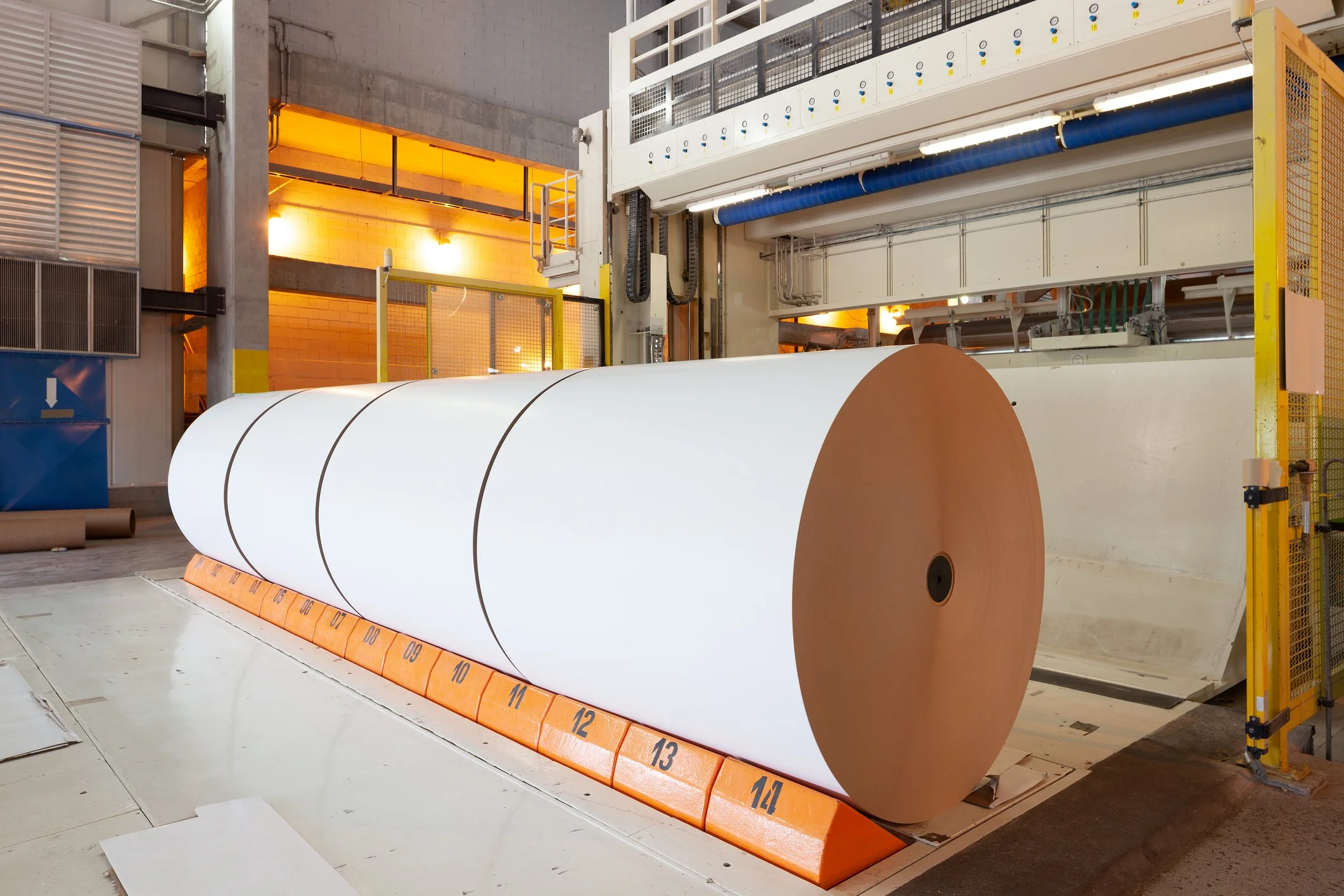
At CCW Services, we support importers, converters, and distributors with specialist paper logistics, including paper roll devanning, warehousing, careful handling, and UK distribution. Read more about our Paper Logistics services.
This post provides a practical guide on paper roll transport, handling and storage, along with an overview of our services.
Why paper roll handling needs specialist equipment
Paper rolls can be compromised quickly by:
Punctures and edge damage from standard forks
Crushing and flat-spotting when rolls are stored incorrectly
Moisture exposure (especially for hygroscopic grades like tissue)
Unstable loads during transport if the rolls aren't secured and handled correctly
Because rolls are often heavy and the outer layers are the product surface, paper roll handling requires both power and delicacy.
Paper roll devanning from containers (and why it's not a standard unload)
Paper roll devanning is rarely a quick forklift job. Containers may be packed to maximise cube, and rolls can be loaded in ways that require specialist attachments and careful manoeuvring.
Counterbalance forklifts
For ground-level paper-roll devanning, counterbalance forklifts are typically the workhorses. Their weight distribution allows them to handle heavy loads at the front without additional stabilisers, while remaining agile enough for container entry.
Mobile yard ramps
Where needed, mobile yard ramps provide a smooth bridge for forklifts moving between the yard or warehouse floor level and the container. This reduces jolts and sudden impacts that can damage roll edges or surfaces.
Paper roll handling equipment used to move bulk rolls safely
Standard forks can puncture rolls, deform the outer layers, or damage the core. CCW uses specialist handling methods and attachments to reduce these risks.
Paper roll clamps
Paper roll clamps use curved, often rubber-coated arms to apply even pressure around the roll. This helps prevent:
punctures from fork tips
surface tearing
crushing from uneven contact
Clamps are particularly useful when rolls need to be moved frequently or positioned precisely.
Rotating clamp attachments
Some paper rolls arrive loaded horizontally (often called torpedo-loaded when laid along the length of a container). In these cases, rotating clamp attachments can be used to rotate rolls (often 90 degrees) into a vertical orientation for safer movement and paper roll storage.
Rounded forklift extensions
For certain roll types and handling scenarios, rounded forklift extensions can provide safer contact surfaces and reduce the chance of cutting or puncturing the paper.
Reel tines (booms)
Where rolls have a sturdy central core, reel tines (booms) can be inserted into the core to lift and extract the roll. This can be an effective option when the roll construction supports it and when the handling plan calls for core-based lifting.
Paper roll storage: why chimney-style matters for many paper rolls
Once rolls are unloaded, paper roll storage is where many preventable issues happen.
Vertical storage to reduce flat-spotting
For many roll types, storing rolls vertically on their circular ends (often referred to as chimney-style paper roll storage) helps prevent flat-spotting a deformation that can occur when heavy rolls sit on their sides for extended periods.
Stacking to maximise warehouse capacity
With the right equipment and procedures, rolls can often be stacked to maximise space. The structural integrity of the core can support multi-level stacking in appropriate conditions, helping increase capacity without compromising stock.
Dry, watertight, odour-free paper roll storage
Paper quality is sensitive to the storage environment. Tissue in particular is highly hygroscopic, meaning it absorbs moisture from the air.
To protect stock, paper roll storage should be:
watertight
odour-free
kept bone-dry to reduce moisture absorption, expansion, and mould risk
Transporting bulk paper rolls: reducing damage in transit
After paper roll devanning and paper roll storage, the next risk point is transport. Damage often happens due to unnecessary re-handling, rushed loading, or poor load stability.
A reliable bulk roll transport plan typically includes:
the right handling attachments for loading/unloading
careful scheduling to reduce time pressure and rework
secure load planning to reduce movement in transit
clear site instructions (booking-in, bay allocation, access constraints)
For many businesses, the best results come from treating paper rolls as a joined-up 3PL workflow: devanning, storage, handling, and distribution, managed by one partner.
Paper roll handling FAQs
-
We use specialist paper roll handling equipment, including paper roll clamps, rounded forklift extensions, and, where appropriate, reel tines (booms).
-
Yes. Where required, we can use specialist attachments (including rotating clamps) to safely handle horizontally loaded rolls and transition them for paper roll storage.
-
Yes. We can combine paper roll devanning, warehousing, careful handling, and UK distribution as part of a joined-up paper logistics and 3PL solution.
-
Yes. Our storage is watertight and odour-free, and it remains bone-dry to help protect paper products.
Need help with paper roll handling, paper roll storage or paper roll devanning?
If you're importing paper rolls, moving bulk reels between sites, or need secure storage and onward distribution, CCW can help. Learn more about our specialist Paper Handling services.
